2026第十二届社会科学与人文国际会议(ICSSH2026)演讲嘉宾信息如下:
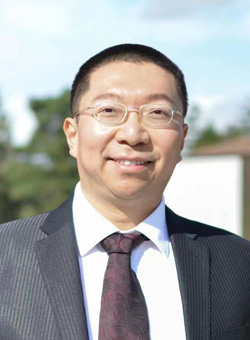
Dr. Lin Wang, Professor
China Association of Science and Education Evaluation, Hangzhou Dianzi University, Hangzhou, China
Biography
Dr. Lin Wang is a distinguished professor of information science at Hangzhou Dianzi University, China. He received a Young Information Scientist award from the China Society for Science and Technology Information and a Bob Williams Research Grant Award from the Association of Information Science and Technology (ASIS&T). He earned a PhD in information science from Peking University. His research interests include the foundations of information science and health informatics. He has published more than one hundred academic papers in international library and information science journals and leading peer-reviewed information science journals in China. Several papers received “best paper” awards from national academic organizations, including the Chinese Society for Science and Technology Information and the Chinese Science and Technology Communication Society. Wang was the chair of the special interest group History and Foundation of Information Science, ASIS&T. He is also the vice chair and general secretary of the Zhejiang Information Resources Management Association.
Topic
When Chatman Meets Chinese Rural Older People with Health Anxiety: From Life in the Round to Concentric Life Circles
Abstract
Rural Chinese older people face significant information poverty and elevated health anxiety, yet their health information behavior remains understudied in non-Western contexts. This study employs in-depth interviews, grounded theory, and information horizon mapping to investigate the health information seeking patterns of this vulnerable group. Our findings reveal a concentric life circle pattern, where health information behavior radiates outward from the core life circle (kinship ties/close community) to transitional life circles (extended networks). By integrating Chatman's small world theory and life in the round theory with China’s localized context, we propose the original "Concentric Life Circle Theory" (CLCT). This theory advances cross-cultural information behavior research and offers actionable solutions to mitigate health anxiety through culturally tailored information interventions.
Dr. Hung Keung, Professor
Department of Cultural and Creative Arts, The Education University of Hong Kong, Hong Kong Special Administrative Region, China
Biography
Dr. Hung Keung is a Professor in the Department of Cultural and Creative Arts of The Education University of Hong Kong. Professor Hung Keung is an internationally renowned digital media artist, researcher, scholar and designer. He graduated from the Swire School of Design at The Hong Kong Polytechnic University and the Department of Fine Arts at The Chinese University of Hong Kong. Later, he pursued further studies in film and video at Central Saint Martins College of Art and Design, University of the Arts London, where he obtained a master's degree. He then earned a doctoral degree from the Planetary Collegium, Zurich University of the Arts, Zurich, Switzerland and the University of Plymouth. Professor Hung Keung has served as a visiting scholar, artist, and guest lecturer at various international universities, including the Zentrum für Kunst und Medientechnologie, Germany (2001-2002), Kolding Design College, Denmark (2002), University of California Berkeley, USA (2006), the University of Oregon (2011), the Australian National University (2015), Western University, Canada (2019), and the University of Hawai'i (2022). He has been engaged in cultural and academic exchanges and promotion activities, involving research, creation, and exhibitions in different fields and interdisciplinary media art.
Topic
Embodied Heritage in the Digital Age: Reimagining the Transmission of Tai Chi through Visual Semiotics, VR Technology, and Data-Driven Pedagogy
Abstract
In the current educational landscape, the preservation and transmission of Intangible Cultural Heritage (ICH) face a critical inflection point. Traditional somatic practices, such as Tai Chi, rely heavily on "embodied knowledge"—a depth of physical and philosophical understanding that is becoming increasingly difficult to transmit to a digital-native generation through conventional master-disciple models. This keynote address proposes a pioneering framework for the digital evolution of cultural heritage, drawing upon the ongoing research project "Tai Chi and Chinese Martial Arts VR 2.0." The core of this research posits that technology should not merely record tradition but must actively restructure how "embodied knowledge" is visualized and internalized. I will introduce an interdisciplinary approach that converges Visual Semiotics, Generative AI, and Virtual Reality (VR). A central innovation of this study is the development of "Novel Typefaces: Tai Chi Compound Characters" (複合字). By applying semiotic principles to typographic design, we have created a visual system that encodes the spatial dynamics of martial arts directly into text, effectively bridging the cognitive gap between abstract theory and physical movement. Crucially, this presentation moves beyond theoretical modeling to present empirical findings from recent school-based fieldwork. Our research team implemented a dual-track curriculum in local schools, teaching students to navigate Tai Chi through both traditional instruction and our "Novel Typefaces." I will present quantitative and qualitative data collected from these classroom interventions, analyzing how these semiotic tools impact student learning curves, form retention, and cultural engagement. The findings indicate that when students deconstruct Tai Chi through these innovative compound characters before engaging with the Immersive VR Training Program, their acquisition of the forms is significantly accelerated. By synthesizing the theoretical lens of "Embodied Heritage" with rigorous school-based data, this address demonstrates how the fusion of artistic typography and advanced VR/AI technology can create a scalable, verifiable pedagogy—ensuring that the ancient wisdom of Tai Chi remains not only preserved but pedagogically vital for future generations.
huiyi123是一个专业提供国际学术会议交流、学术论文出版的平台。会议接受中文和英文文章,提供30-60天快速在线出版。会议在上海,杭州,南京,成都,西安,武汉,苏州,济南等城市举办。
联系我们
邮箱:contact@conference123.net
手机:0086-18616502321
0086-18621626037
微信:18616502321
地址:上海市普陀区岚皋路567号品尊国际中心B座11楼

添加组委会微信
(王老师)